By Rachel Bradley
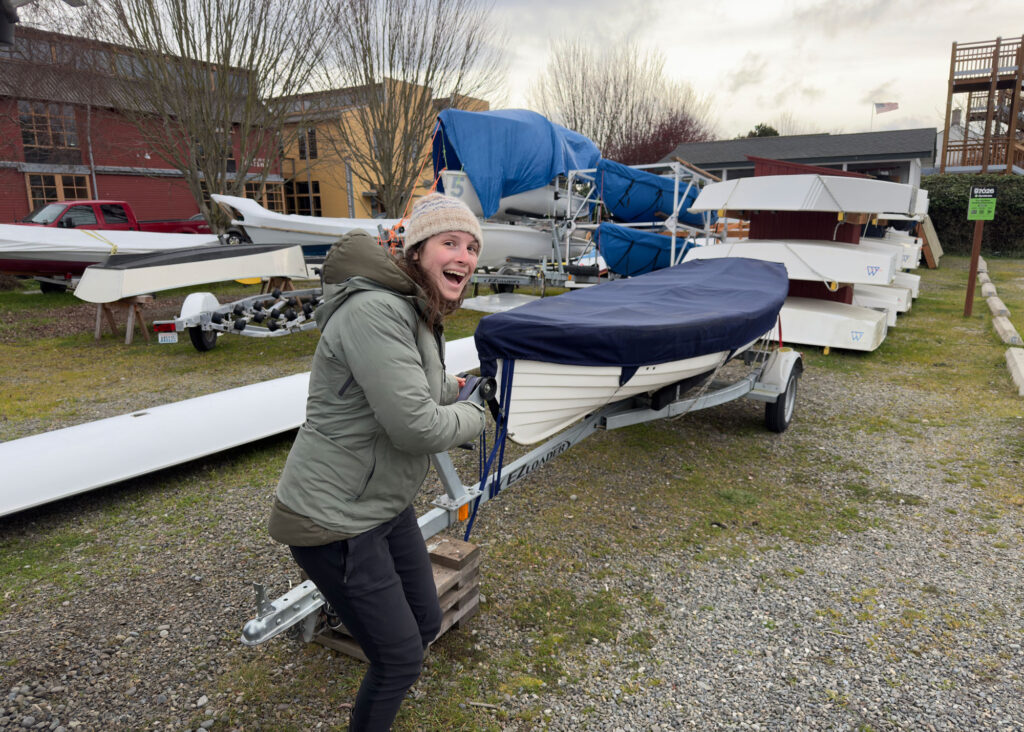
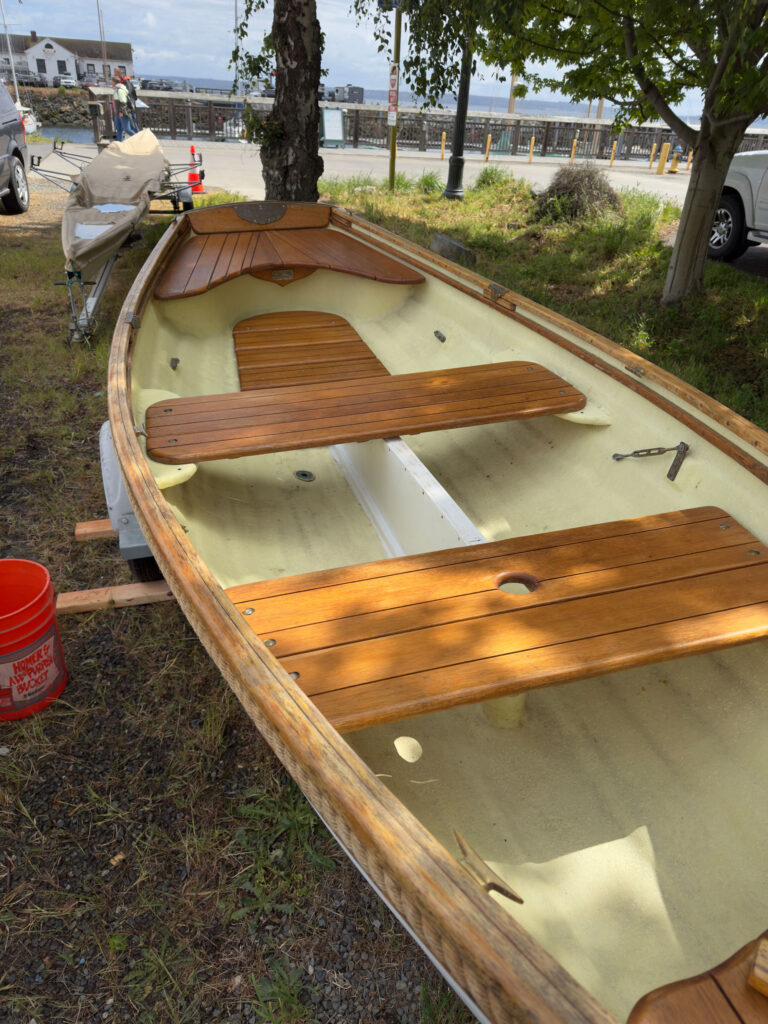
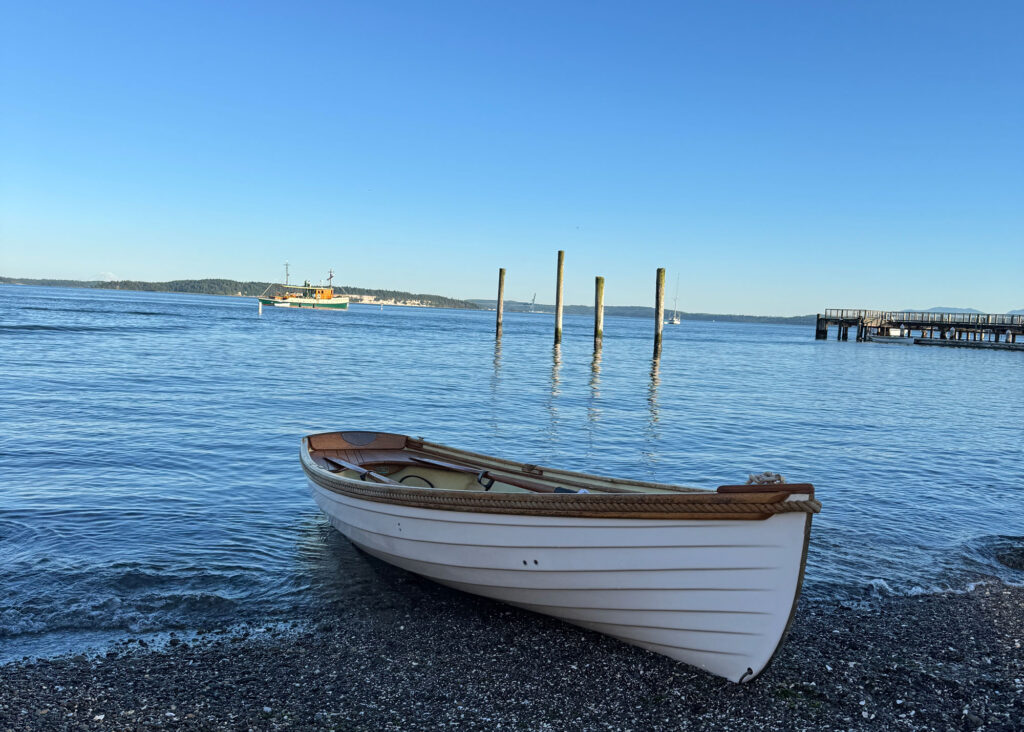
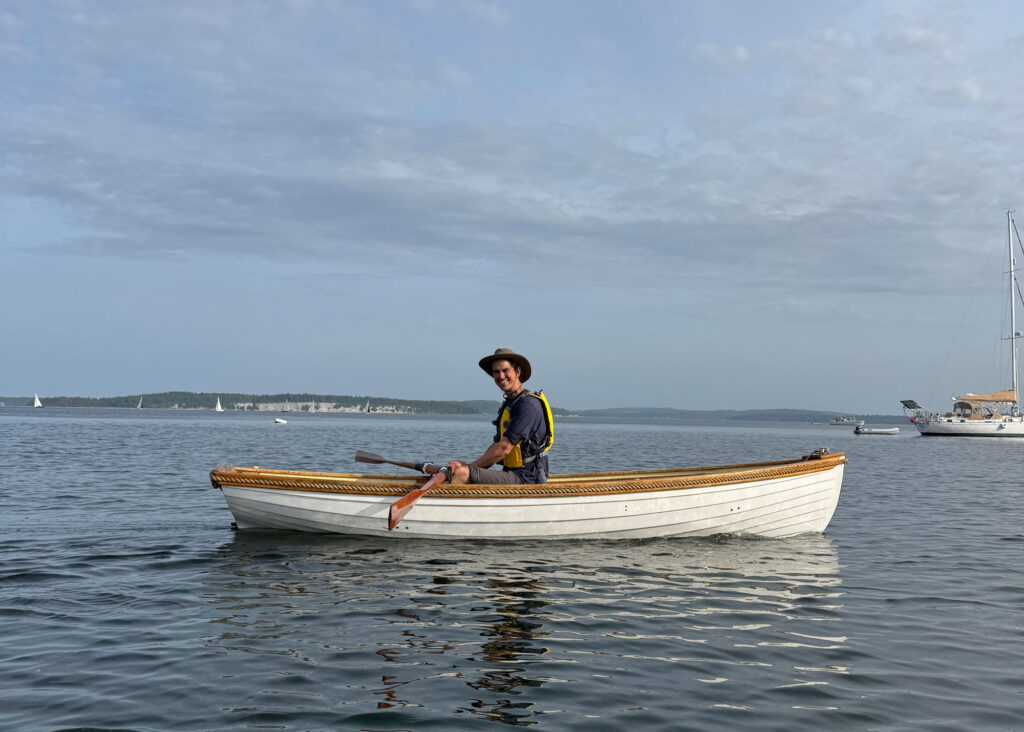
If you’ve ever spent time on the water or been around boats, you might know the feeling of looking at a vessel and falling in love. I had been searching for a sailing dinghy for over six months, waiting for the right boat to come along that sparked that feeling of joy. Through a friend of a friend, I was put in touch with a past SEVENTY48 racer who was looking for a new home for her 14-foot Whitehall-esque sailing and rowing dinghy. It met all the criteria I wanted for my first boat: fiberglass, between 12-17 feet, and able to row and sail decently well. As soon as I could, I went to inspect the boat with my less-than-knowledgeable eye and was fully convinced I had to have her. All looked to be in tip-top shape except for a small but known leak from the centerboard trunk. The fix sounded simple enough… just remove the trunk and re-bed it—easy. First lesson learned: Few projects are ever as simple as they seem.
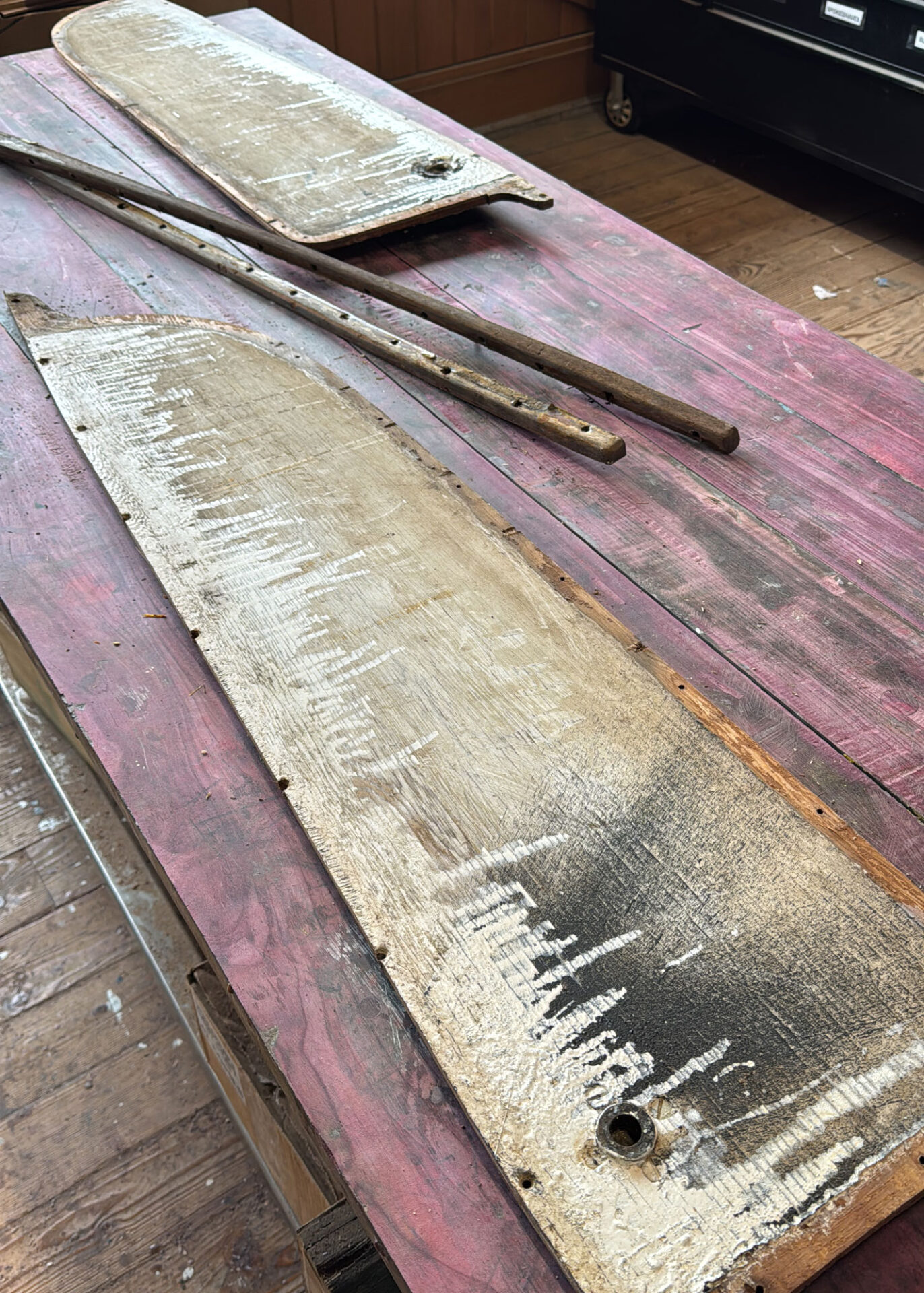
After a couple of times rowing the boat (whom I named Zayde) and realizing that slowly (very, very slowly) sinking due to the centerboard leak was not optimal, I decided it was finally time to tackle that “quick and simple” project. I removed the whole centerboard trunk easily enough, making many discoveries along the way. The trunk was initially screwed top down into the ⅛” thick fiberglass hull with the screws barely biting anything, not confidence-inspiring. In addition, the trim pieces used to secure the trunk to the hull were mostly rotted through. They were barely held on by corroded bronze screws that had been sliced in half. Upon further inspection of the centerboard trunk, I found the inside contained wet, swollen wood and peeling paint. Sigh, this had officially become a boat project. Even to my untrained eye, I knew these things would have to be fixed.
The first thing I did was pull apart the trunk and sand everything down to bare wood. I knew I wanted to make the inside as waterproof as I could, and the best method for that seemed to be slathering every square inch with epoxy. With TotalBoat’s pump dispenser set up at the Boatshop, it was super easy to portion out the right amount of epoxy for the job without worrying about messing up the mixing ratios. I filled all the old screw holes with thickened epoxy and spread three coats along the inside. Next, Boatshop Manager Joel showed me how to safely use the band saw and helped me build the new trim pieces. Reassembly time!

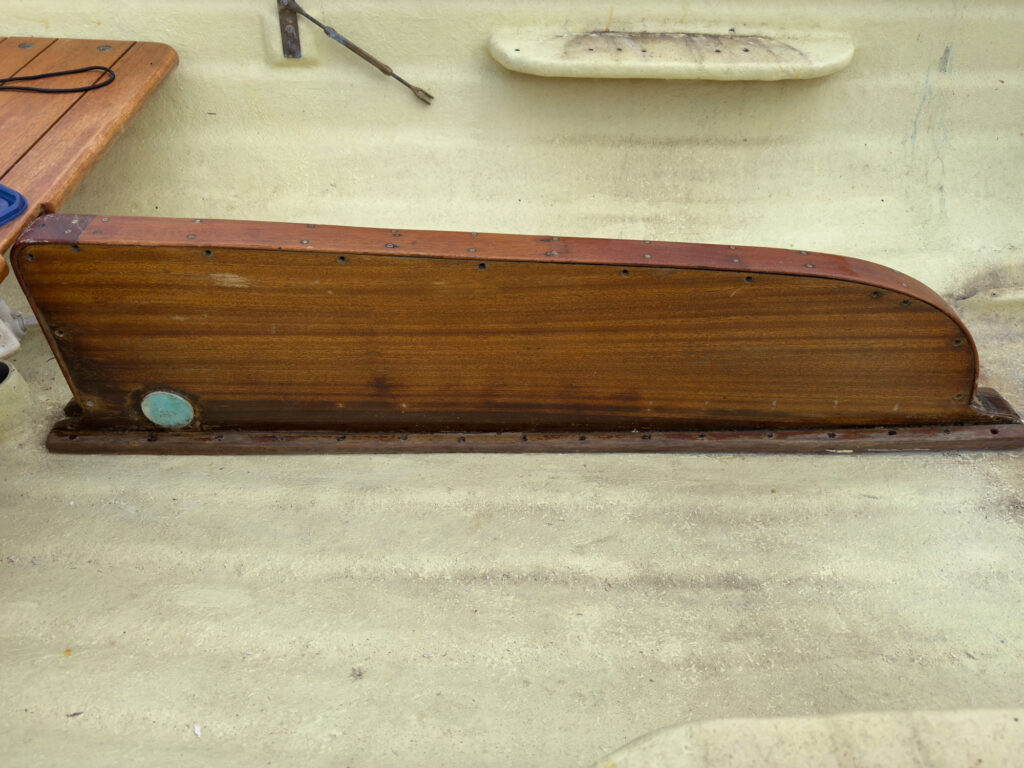
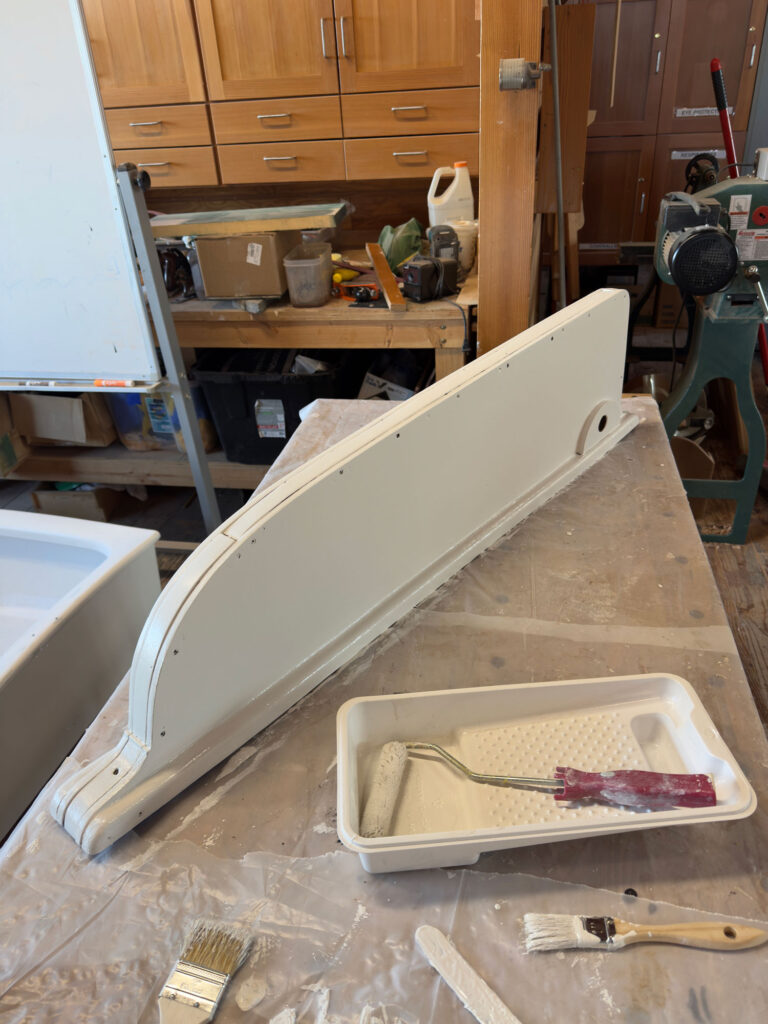

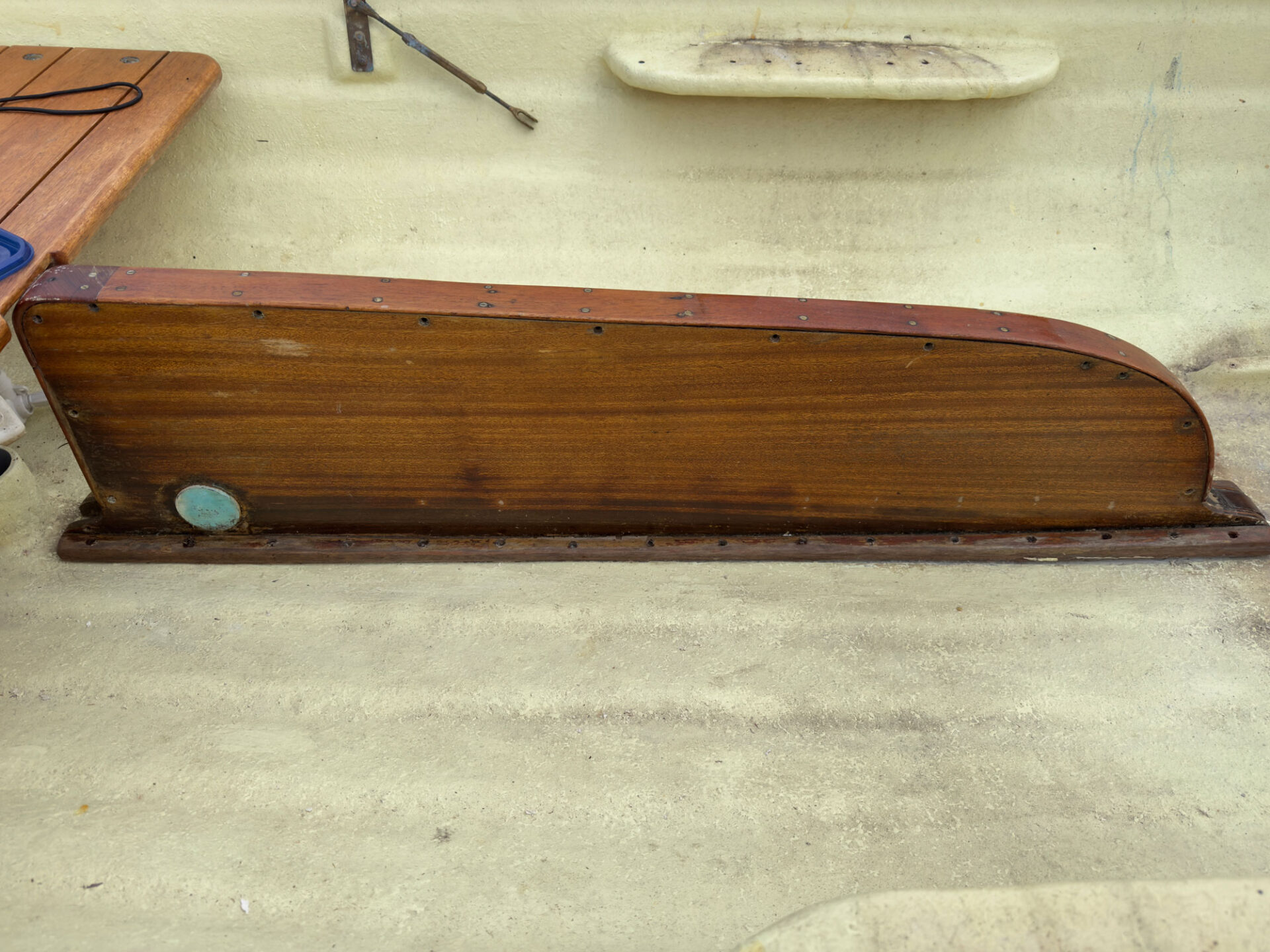

Originally, the centerboard trunk was nicely varnished, but as the warm days approached, I went for “good enough” rather than “visually stunning.” An epoxy-based paint sounded like the best solution to protect the freshly sanded exterior. With TotalBoat Topside Primer and paint in hand, I “finished” the centerboard trunk. “Did you seal those seams?” Joel pointed to the “completed” centerboard trunk. I did have the thought to put a sealant between all the components, but opted for quick and dirty. Lesson two learned: Do it right once. Because parts of the centerboard trunk sit below the waterline, with the centerboard down, I would get water ingress when sailing. This would defeat the purpose of the whole project. After the centerboard trunk was disassembled and reassembled, it was time to install it back aboard Zayde.
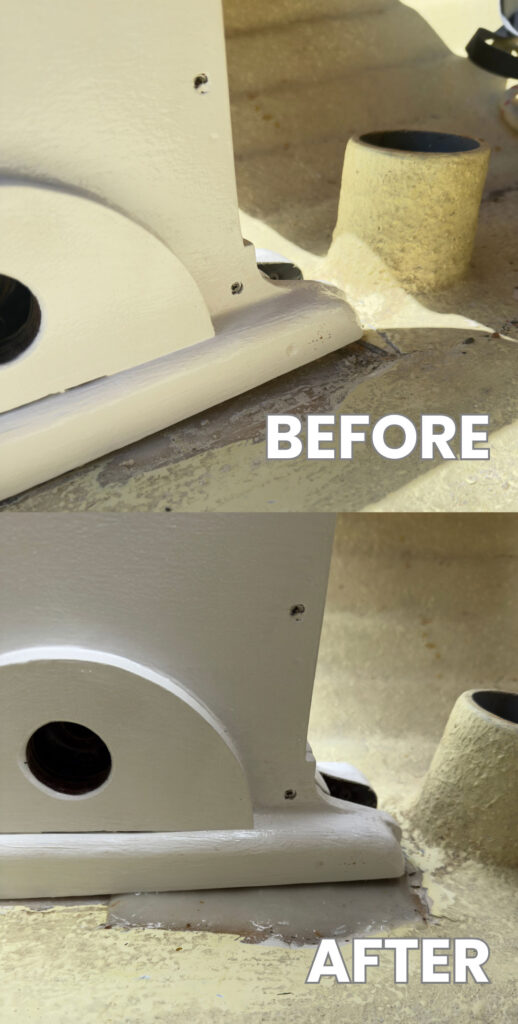
The thing about not measuring precisely enough is that it bites you in the butt later down the line. I thought I had matched the hull curvature with the new trim pieces, but not closely enough. Hastily templating at the beginning led to the forward and aft ends sitting a solid 3/8″ away from flush to the hull—another problem to solve. Fiberglassing a piece of foam or wood to make up the difference sounded like too much work for too little reward. I needed a solution that would be fairly easy to implement, strong, and shapeable. Regular thickened epoxy wouldn’t do the trick, but TotalBoat’s Chopped Strand was the perfect solution. Finally, after weeks of work, the centerboard trunk could go back in; this time, screwed up from the bottom with copious amounts of Sikaflex. One late night at the Boatshop later, Zayde was ready to be a water boat rather than a land boat. My first boat project taught me to slow down, ask plenty of questions, and accept that “good enough” is just that, good enough. Even though I’m a perfectionist at heart, I’d prefer to spend my time out on the water than fussing over the perfect finish. Thanks to Joel and everyone at the Boatshop for putting up with my relentless questions and sharing their years of boatbuilding wisdom. And a shoutout to TotalBoat for making easy-to-use and intuitive products.