OLYMPIA OYSTER
RESTORATION
Welcome to Northwest Maritime’s Native Oyster Nursery
The Olympia Oyster Restoration Project is a key part of our Blue Schools Initiative, connecting students to maritime careers, their communities, and real-world ocean restoration.
THE INITIATIVE
At Northwest Maritime, we’ve partnered with Puget Sound Restoration Fund and the Jamestown S’Klallam Tribe to put Olympia oysters at the center of science, restoration, hands-on learning and ocean stewardship.
Olympia oysters (Ostrea lurida), are the only oyster species native to Puget Sound. Once abundant, their populations have declined due to overharvesting, habitat loss, pollution, and invasive species. Today, Tribes, scientists, and community partners across the region are working to help them recover, and are leading regional efforts to rebuild self-sustaining Olympia oyster populations.
THE NURSERY
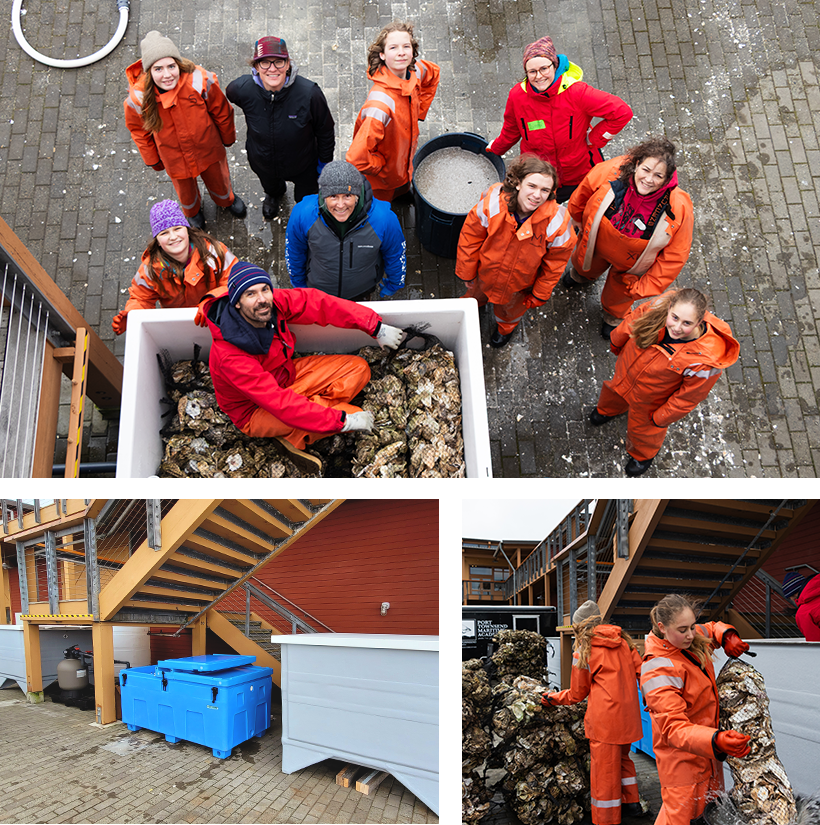
Two oyster tanks were installed on the Northwest Maritime campus, beneath the stairs at the back of the Keith McCaw Boatshop.
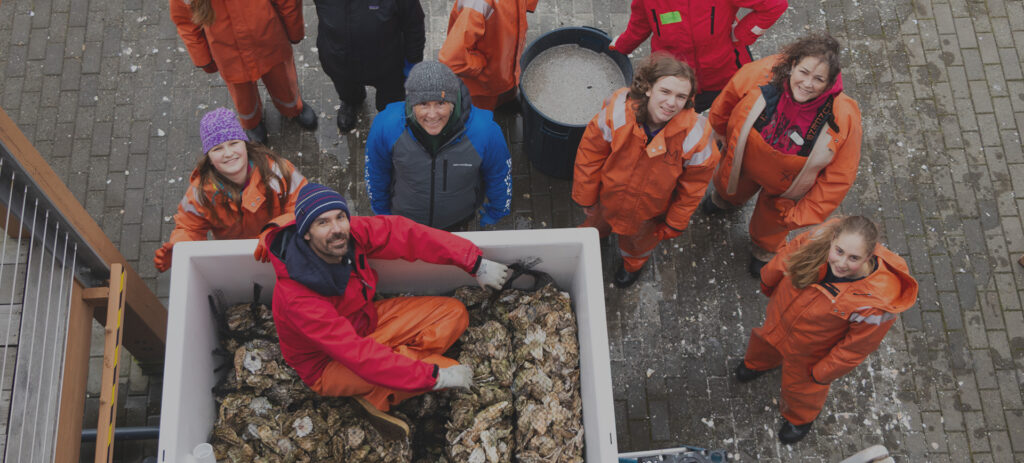
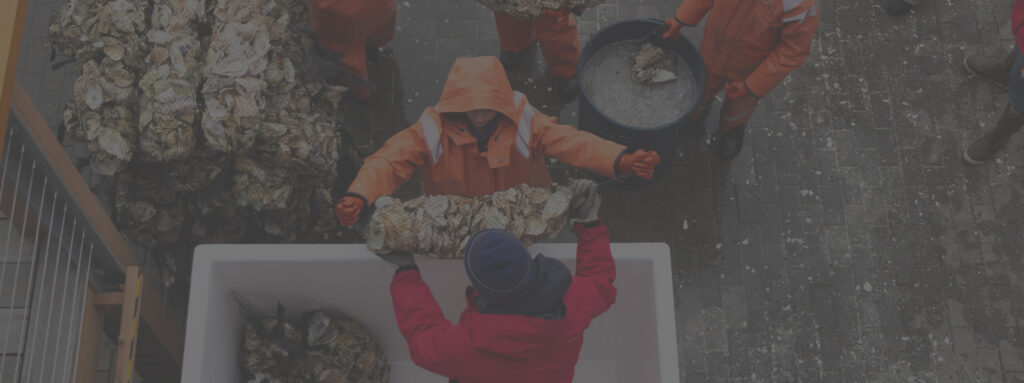
Puget Sound Restoration Fund Hatchery Director, Ryan Crim, with Northwest Maritime’s Team Longboat students and instructors, loaded 50 bags of oyster cultch to prepare the setting tanks. Each bag of cultch contains approximately 250 shells, and each shell will eventually be expected to host about 10 spat.
In February 2026, several million microscopic larvae were transferred into the tanks. During our pilot year, we anticipate the production of 100,000 to 250,000 oysters.
OUR ROLE
Our role is to grow young oysters (“spat”) that will later be transferred to restoration sites around Puget Sound. The Oyster Restoration Project is a key component of our Blue Schools Initiative, which connects students to maritime careers, their communities, and real-world ocean restoration.
Students will gain workplace experiences by performing operational checks, monitoring water quality, flushing systems, completing water changes, feeding and caring for oyster spat, and learning how healthy shellfish populations support cleaner water, stronger habitats, and resilient coastal ecosystems.
Students will engage with the tanks at varying levels of involvement—from short educational rotations to recurring involvement over months, allowing students to watch oysters grow from larvae to juveniles destined for restoration sites.
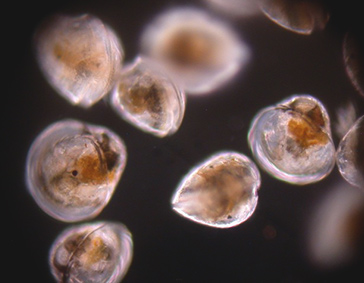
Olympia oyster spat, viewed under a microscope.
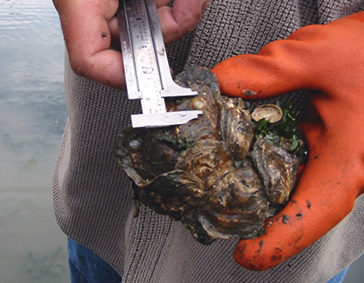
Measuring an Olympia oyster growing atop other oysters.
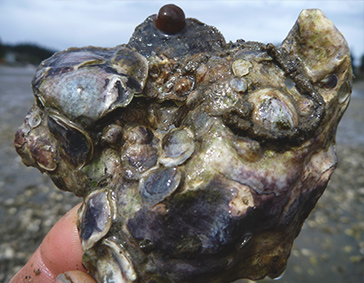
A group of Olympia oysters growing on a shell.
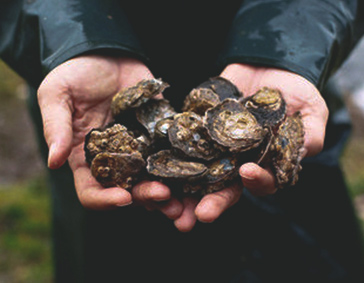
Olympia oysters that have reached maturity.
By late spring, the juvenile oysters are expected to be transported north to support ongoing Olympia oyster restoration work, in collaboration with Puget Sound Restoration Fund and the Whatcom County Marine Resources Committee in Chuckanut Bay, south of Bellingham.
“Situating education in real-world settings is key to creating transformational learning experiences.
When something only lives in a classroom as a concept, it can be hard to connect to, but when students see how what they’re learning directly impacts their community and ecosystem, it becomes meaningful.”
Simona Clausnitzer
School Program Manager